Cold Weather Turns EV Range Into Planning
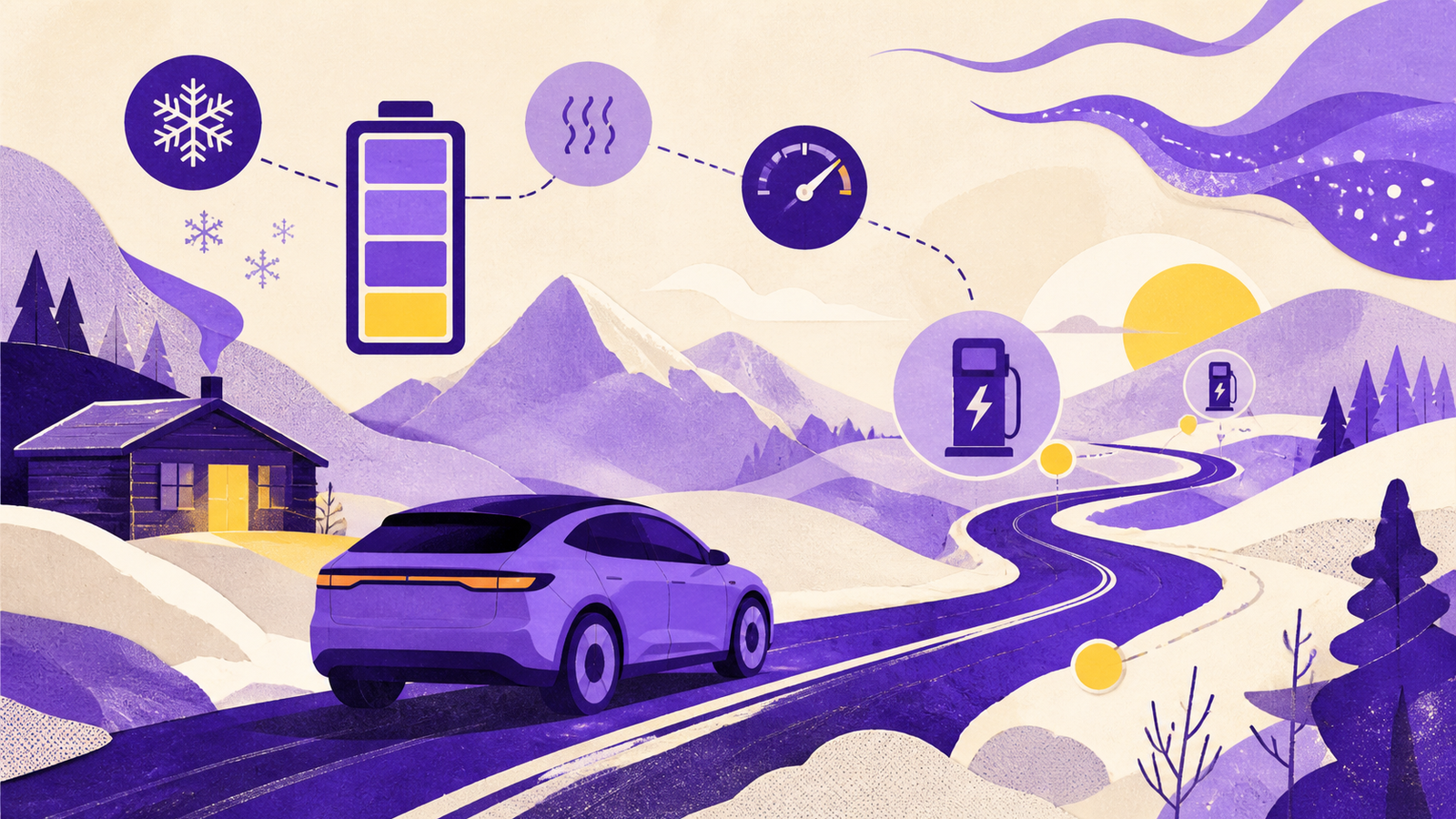
Cold Weather Turns EV Range Into Planning
The dashboard says 230 miles at breakfast. By lunch, the car has covered 116 miles and the driver is suddenly interested in thermodynamics. Cold weather does not make electric vehicles mysterious. It makes their energy flows visible.
Petrol cars lose efficiency in winter too, but they waste so much heat that cabin warmth feels free. An electric vehicle is less wasteful, which means heat has to be produced deliberately or moved efficiently. The battery is colder, the air is denser, the tires roll differently, the road may be wet, and the driver wants a warm cabin. Range becomes less a fixed promise and more a planning variable.
The right response is not panic. It is to stop treating the rated range as a travel budget and start treating it as a laboratory result.
Battery chemistry slows down
Lithium-ion batteries are chemical systems. Cold temperatures slow reactions and increase internal resistance. The pack can deliver energy, but it may deliver it less efficiently, and the car may reserve some capacity to protect the battery. Regenerative braking can also be limited until the pack warms.
This is why the first miles of a winter trip can feel especially expensive. The car is warming the cabin, conditioning the battery, and pushing through cold air before the system reaches a better operating state. Short trips suffer more because the warm-up cost is spread over fewer miles.
A winter commute of six miles can look brutally inefficient. A winter highway trip may settle into a more predictable pattern after the initial thermal work is done.
Cabin heat is not a rounding error
In an EV, cabin heat comes from the battery either through resistive heating or a heat pump. Heat pumps are more efficient, but their advantage depends on temperature, humidity, design, and operating conditions. In severe cold, even efficient systems work harder.
The practical move is preconditioning while plugged in. Warm the cabin and, when the vehicle supports it, warm the battery before departure using grid power instead of stored driving energy. Seat heaters and steering-wheel heaters can also be efficient because they warm the person rather than the whole air volume.
This is not about suffering in a cold car to save electrons. It is about using heat where it matters.
Speed is the quiet thief
Aerodynamic drag rises sharply with speed, and winter air is denser. The difference between 65 and 75 miles per hour can matter more than people expect. Add roof boxes, crosswinds, wet roads, and cold tires, and the rated range becomes a polite fiction.
Highway winter range is therefore a speed decision. Driving slightly slower may save enough energy to skip a marginal charging stop or arrive with a comfortable buffer. The time lost on the road can be less than the time lost at an avoidable charger.
This is the central winter EV trade-off: speed now versus certainty later.
Charging is also temperature-sensitive
Cold batteries do not accept high charging power as readily. Many EVs precondition the battery when navigating to a fast charger, but the driver has to let the car know the destination. Arriving at a charger with a cold pack can turn a quick stop into a long one.
The state of charge matters too. Fast charging is usually fastest at lower-to-mid battery levels and slows as the pack fills. Winter makes this discipline more important. Instead of charging to 100 percent at every stop, a faster strategy may be to arrive lower, charge in the efficient band, and move on with a realistic reserve.
The best winter stop is not necessarily the closest charger. It is the charger the car can reach with buffer, at a battery temperature and state of charge that make the stop efficient.
The buffer is part of the route
Route planning in mild weather can be casual. Winter punishes casual margins. A charger may be occupied, broken, slower than advertised, blocked by snow, or located in a lot where the detour costs more energy than expected. A headwind can turn a comfortable leg into a tense one.
A real buffer is not leftover anxiety. It is a planned reserve for weather, detours, battery conditioning, and human needs. The correct buffer depends on charger density, road type, temperature, elevation, and passengers. A dense corridor with multiple fast chargers allows thinner margins. A rural winter route does not.
Planning references such as evrangeguide.com are useful when they force the driver to think in climates, charger spacing, and route conditions rather than treating a single range number as portable across seasons.
Elevation cuts both ways
Climbing consumes energy quickly. Descending can recover some through regeneration, but not all. Cold weather can limit regeneration, and a full battery may not accept much recovered energy. Mountain routes therefore require more careful planning than flat maps suggest.
The common mistake is to see the destination distance and ignore vertical work. A short mountain leg in winter can be more demanding than a longer flat one. The return trip may be easier, harder, or merely different depending on temperature, wind, and charging options.
Elevation is not scenery in an energy plan. It is a bill.
Home charging changes the psychology
Winter EV ownership is dramatically easier with reliable home or workplace charging. Starting each day warm and full turns many range worries into occasional trip-planning problems. Without home charging, the driver has to combine ordinary errands with public charging, and cold weather makes every delay more annoying.
This is why EV advice should be honest about infrastructure. The same car can be effortless for one household and irritating for another because charging access differs. Vehicle range matters, but routine charging matters more.
A 250-mile EV with home charging can feel freer than a 350-mile EV dependent on a poor public network.
A winter EV framework
Use a simple planning stack.
- Precondition: warm cabin and battery while plugged in when possible.
- Reduce drag: moderate highway speed and remove unnecessary roof loads.
- Plan charger arrival: navigate to fast chargers so the car can prepare the pack.
- Use realistic buffers: widen margins for cold, wind, elevation, sparse chargers, and passengers.
- Charge for the next leg: avoid slow top-ups unless the route requires them.
- Know the fallback: identify the second charger before needing it.
Cold weather does not turn EV driving into a gamble. It turns hidden energy assumptions into explicit decisions. The driver who plans those decisions is not being cautious. They are simply reading the vehicle in the season it is actually in.
Tires and pressure are part of the range system
Winter range is not only battery chemistry. Tires matter. Cold air reduces tire pressure, winter tires can increase rolling resistance, and wet or slushy roads consume more energy. The difference may be small on one errand and material on a long highway leg with thin charging margins.
Drivers who check pressure only when a warning appears are already late. The correct pressure is a simple maintenance habit that protects range, tire wear, and handling. It is also one of the few winter variables the driver can control without spending money or changing vehicles.
This is why serious range planning feels mundane. It is less about heroic charger tactics and more about doing the ordinary things before they become constraints.
Passenger comfort changes the math
A solo driver can choose a cooler cabin, a slower speed, or a longer charging stop. A family with children, an older passenger, or someone prone to motion sickness has different requirements. Range planning has to include comfort because discomfort changes decisions. The cold car that saves energy may create an unplanned stop ten minutes later.
Good planning protects both battery and passengers. A route that looks efficient but makes the group miserable is not efficient in any useful sense.