Streaming Catalogs Are Local Supply Chains
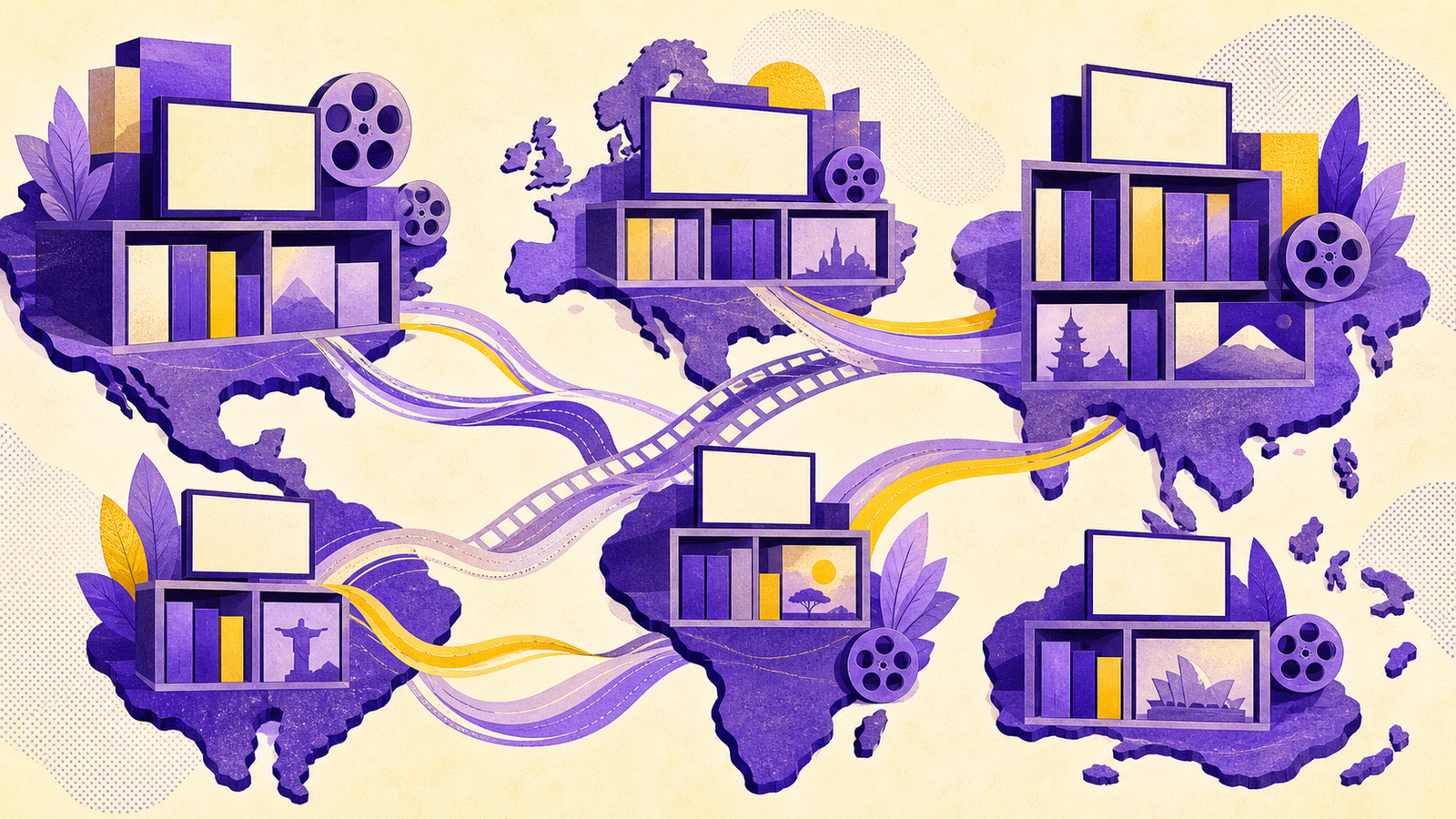
Streaming Catalogs Are Local Supply Chains
A platform can be global in the app store and local the moment you press play. The logo is the same, the interface is familiar, and the catalog underneath may be a different animal. This is not a bug in the streaming age. It is the streaming age working as designed.
People talk about catalogs as if platforms simply own piles of titles and decide how generous to be. The reality is closer to a supply chain. Rights have territories, windows, languages, holdbacks, guild rules, censorship requirements, music clearances, dubbing capacity, tax incentives, and renewal dates. A country catalog is the visible shelf built from all those upstream constraints.
That is why catalog size is a crude number and still a useful one. It does not tell you whether a service is good. It tells you that a local industrial system sits behind the screen.
Rights are territorial by habit and design
Film and television rights were split by territory long before streaming became the default consumer experience. Distributors, broadcasters, pay-TV networks, airlines, hotels, cinemas, and home-video companies all bought pieces of time and geography. Streaming inherited that map.
A show may be owned by one company, licensed to another in Germany, tied to a broadcaster in Japan, unavailable in Canada because of an older output deal, and bundled into a regional agreement elsewhere. The platform cannot simply make the title global because the app is global. Someone may already own the local window.
The consumer sees absence. The lawyer sees contracts doing exactly what they were written to do.
Catalog size is not catalog value
A service can have a large catalog full of low-demand filler or a smaller catalog with strong local relevance. Counting titles is tempting because it is measurable. Value depends on taste, freshness, exclusivity, language, household composition, and the depth of specific genres.
Still, size matters at the margin. A deeper catalog improves browsing, retention, niche satisfaction, and the chance that a household finds something for different moods. It also signals licensing strategy. A platform leaning on originals may have a different catalog shape from one using broad licensed libraries to reduce churn.
The right interpretation is not bigger equals better. It is bigger gives the platform more ways to be useful, provided the titles match local demand.
Localization is a bottleneck
A title is not ready for a market because the video file exists. Subtitles, dubbing, metadata, artwork, age ratings, content warnings, accessibility files, and customer support all have to be prepared. For major releases, localization may be part of the launch plan. For library titles, it may not be worth the cost in every country.
Language changes discovery too. A comedy that depends on idiom may travel poorly. A procedural drama may travel well. Children’s content often needs dubbing because the audience cannot read subtitles. A documentary may require careful translation of technical or political terms. These are not cosmetic tasks. They change whether the title can earn attention.
Localization turns rights into usable inventory.
Regulation shapes the shelf
Some countries require local content quotas, age classification, specific takedown procedures, data practices, or investment obligations. Others apply censorship rules or political sensitivities that change what can be offered. Even when a title is legal, a platform may avoid it if the compliance burden is not worth the expected viewing.
Regulation can also strengthen local production. Quotas and investment rules may push platforms to commission domestic series, which can improve relevance for local audiences and create exportable hits. The catalog is then shaped by both restriction and opportunity.
Media markets are never pure preference engines. They are cultural policy instruments, even when the interface looks like private choice.
Comparisons of catalog depth by platform and country, such as those tracked at platformtrack.com, help reveal this local machinery because they show where the same global brand has made different supply decisions in different markets.
The churn problem drives breadth
Streaming businesses fear cancellation. A household cancels when the service stops feeling necessary. New originals create spikes of attention, but broad libraries create habit. The catalog must serve Friday-night certainty and Tuesday-night drift.
This is why old shows matter. A familiar sitcom, procedural, cooking series, anime backlist, or children’s franchise may not generate headlines, but it reduces the chance that a subscriber opens the app and finds nothing suitable. The economic value of comfort viewing is retention.
Platforms therefore balance expensive exclusives with dependable volume. The mix changes by country because local competitors, pay-TV history, language, and household taste change the retention equation.
Originals do not escape geography
Global originals seem like the solution to territorial licensing. Produce the show, own the rights, release it everywhere. That works better than patchwork licensing, but geography still returns.
Production incentives, union rules, local crews, shooting locations, language choices, censorship risk, and promotional strategy all matter. A global original may be designed to travel, but it is still made somewhere, with specific assumptions about audience and format. Some originals become local prestige plays. Others are built as export products. Many do both badly.
Owning rights simplifies distribution. It does not guarantee relevance.
Why catalogs keep changing
Users experience removals as betrayal. Platforms experience them as contract turnover. Licenses expire, renewal prices rise, rights owners take titles back for their own services, performance disappoints, or a title becomes more valuable elsewhere. The catalog is a living inventory, not a permanent library.
This creates a strange consumer expectation gap. Physical media felt owned. Streaming feels available until it suddenly is not. The platform sells access to a changing bundle, and the bundle is optimized for business goals rather than personal memory.
For serious viewers, this makes discovery tools and watchlists fragile. The title you planned to watch later may not wait.
A better way to read a catalog
Instead of asking whether a platform has enough titles, ask what kind of supply chain it is operating in that country.
- Rights depth: Does it rely on owned originals, licensed libraries, or local partnerships?
- Language fit: Are subtitles, dubs, and metadata strong enough for casual viewing?
- Genre coverage: Does it serve children, comfort viewing, prestige, sports-adjacent content, anime, documentaries, or local drama?
- Renewal stability: Are useful titles staying long enough for habit to form?
- Local competition: Which broadcasters, studios, or platforms already control key rights?
The catalog is the product, but it is also evidence. It shows how a global service negotiates with local law, language, contracts, and taste. Streaming did not erase geography. It made geography clickable.
Local hits travel unevenly
One of streaming’s stranger effects is that local productions can become global without becoming universal. A crime drama from one country may become a surprise hit abroad because the genre travels well, the setting feels fresh, and subtitles are acceptable to the target audience. A beloved local comedy may barely move because humor, celebrity, and class signals resist export.
Platforms learn from these patterns. They may fund local work partly for domestic retention and partly for the chance of export. The catalog then becomes a portfolio of cultural bets. Some titles are built to satisfy national taste. Some are designed to cross borders. Some accidentally do both.
This makes local catalogs more important, not less. The next global hit is often not the most globally generic show. It is a specific show with enough craft, genre clarity, and emotional access to survive translation.
Sports and live rights sit outside the usual catalog logic
Live rights, especially sports, can reshape a platform’s value even if they add little to title count. A service with fewer films may become essential because it controls a league, tournament, or weekly event. The economics are different: appointment viewing, churn control, advertising value, and local passion matter more than library depth.
This is why catalog comparisons should not pretend all minutes are equal. A thousand forgettable films and one must-watch live competition solve different business problems.